Summers off?
End-of-season celebrations are lovely — until they become permission to stop. Some thoughts on summer break, a church ladder, and why learning doesn't have an off-season.
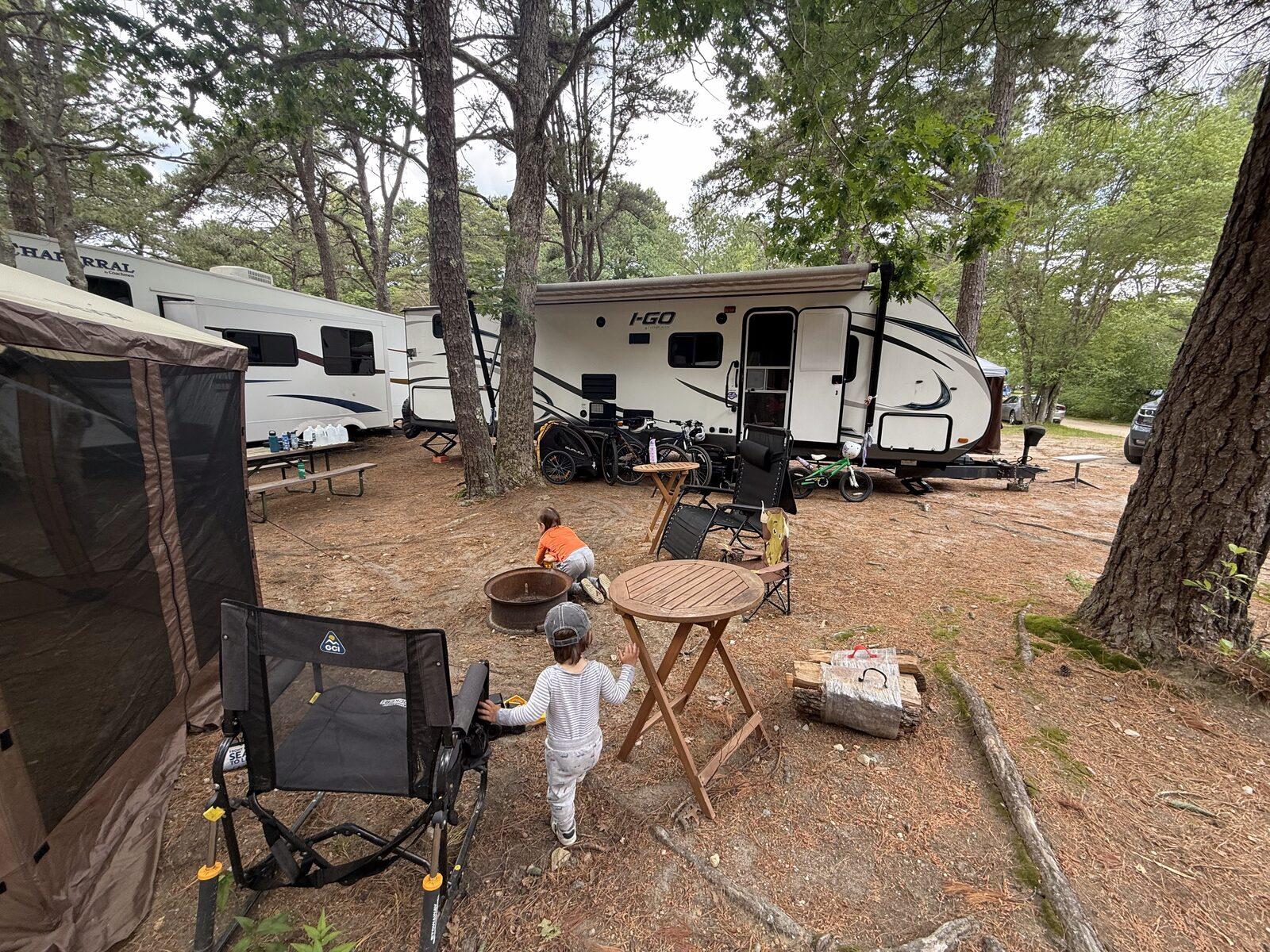
A few weeks ago the season ended. You know the one I mean — the season of everything. The co-op wrapped up with a potluck. The music program had its recital. Sports had their final games and their little trophy ceremonies. Even our local church held its end-of-season celebration and then, like everything else, closed up shop for the summer.
I've been turning that over in my head ever since. An end-of-season celebration is a lovely thing. But what exactly are we celebrating? Because from where I stand, it looks an awful lot like we're celebrating permission to stop.
Real life doesn't take the summer off
Here's what got me thinking about this. The church near us doesn't hold services during the summer. No services means no programs, no gatherings, not much of anything until fall. But buildings don't know it's summer. Gutters still fill. Paint still peels. Things still break.
So there I was on a recent Sunday — and I should mention I'm not even a member of this church — helping with maintenance to keep the place alive and healthy for a congregation that had largely gone home for the season. I don't tell that story to pat myself on the back. I tell it because of what it made obvious to me while I was there: the world doesn't pause just because the calendar says it's time for a break. Something has to keep the place standing. Growth and upkeep don't have an off-season. We just pretend they do.
And if that's true for a building, it's a lot more true for a child's mind.
Where did this idea even come from?
The school-year calendar is so deeply baked into our culture that we rarely ask why it exists. Whatever its origins — and there are more myths about that than facts — the modern version persists mostly because it's what we've always done. Institutions run on it, so families plan around it, so institutions keep running on it.
But notice what the calendar quietly teaches. It teaches that learning is a thing with a beginning and an end. That it happens in a certain building, during certain months, administered by certain people — and that when those months are over, you're done. You've earned the right to stop. Learning becomes labor, and summer becomes the reward for enduring it.
If you've read anything else on this site, you can probably guess how I feel about that lesson. It's the same one that taught me, years ago, to stop loving books. When learning is something you're released from, you learn — deeply, permanently — that learning is a burden.
This is not an argument against rest
Let me be clear about what I'm not saying. I'm not saying skip the family vacation. Take the vacation. We do. I'm not against slow mornings, long evenings, kids disappearing outside until dinner. Rest is real, and childhood summers are precious.
What I'm pushing back on is the idea that rest and growth are opposites — that resting means stopping. The warmer months change what we do, and they should. Less time at the table, more time in the garden. Fewer workbooks, more rivers. Different pace, different projects, different questions. That's not stopping. That's just learning wearing its summer clothes.
A kid who spends July building a fort, tending tomatoes, reading whatever they want on the porch, and asking why the fireflies light up is not on a break from learning. They're doing the most natural kind there is. The only thing they're on a break from is the institutional version — and honestly, that break might be the healthiest part of their year.
The trouble is when 'summer break' becomes an excuse to stop growing entirely — for the kids and, just as often, for us. Screens creep in to fill the unstructured hours. Curiosity idles. September arrives and everyone talks about the 'summer slide' as if it were a law of nature instead of a choice we made back in June.
Learning is a lifelong endeavor
This is one of the quiet advantages that drew our family toward alternative education in the first place: when you stop outsourcing learning to an institution, you stop inheriting the institution's calendar. Learning stops being a season and becomes a way of living in the world. Some months are heavy on books, some are heavy on mud, and there's no bell — in June or any other month — that tells you you're finished.
So by all means, celebrate the end of the season. Have the potluck. Hand out the trophies. But maybe we skip the part where we act like the growing is done until fall.
The gutters don't believe it, and neither do our kids.