Our Guide to Unschooling
The Idea Behind Unschooling
Unschooling begins with a question most of us were never invited to ask: what if the problem isn't how school teaches, but the assumption that children must be made to learn at all? Every parent has watched a toddler acquire an entire language, master walking, and construct a working model of how the world operates — without curriculum, lessons, or grades. Unschooling is the bet that this same engine, which powers the most impressive learning feats of any human life, does not stop working at age five. It only appears to stop because school replaces the child's own questions with someone else's answers, delivered on someone else's schedule.
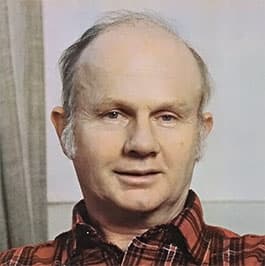
The term comes from the educator John Holt, whose classroom observations in the 1950s and 60s convinced him that most school failure was produced by fear — fear of being wrong, of being shamed, of disappointing adults — and that children who seemed unable to learn in class learned voraciously outside it. Holt's conclusion, radical then and still radical now, was that children given access to a rich world and trusted adults will educate themselves, and that most teaching interferes with learning more than it helps.
It is worth saying plainly what unschooling is not. It is not neglect, and it is not the absence of adults. Unschooling parents are intensely involved — as conversation partners, chauffeurs to obsessions, finders of mentors, strewers of interesting things across the path. What they give up is coercion: assigned lessons, required subjects, testing, and the use of approval as a lever. What they keep is everything else.
But How Do They Learn Math?
This is the question that stops most parents, so it deserves a direct answer. In unschooling practice, academic skills tend to arrive asymmetrically and late-then-fast rather than early-and-steadily. A child might show no interest in reading until eight or nine, then move from picture books to novels within a year — a pattern unschooling communities have reported for decades, and one documented in accounts from self-directed schools like Sudbury Valley. Math often arrives through the back door: baking, budgeting allowance and earnings, video games, carpentry, coding, or the moment a teenager decides she wants something — a qualification, a business, a college program — that requires it. A motivated fourteen-year-old can cover years of arithmetic in months, because she is learning it as a tool rather than absorbing it as a schedule.
The honest caveat is that this requires nerve, and it does not always go smoothly. If a foundational skill never connects to any interest, gaps can persist and become obstacles — most unschooling writers acknowledge this, and the families who navigate it well are the ones paying attention rather than looking away. Unschooling replaces the curriculum with the parent's attention; it cannot survive the absence of both.
A Day in an Unschooling Life
There is no typical day, which is precisely the point — but a composite might help. A ten-year-old wakes without an alarm, spends the morning deep in a Minecraft build with online friends (negotiating, planning, reading wikis, doing more geometry than he would admit), joins a weekly park meetup with other homeschooled kids after lunch, helps make dinner while interrogating a parent about why onions caramelize, and falls asleep listening to an audiobook two 'grade levels' above his supposed reading age. No part of that day was a lesson. Every part of it was learning.
The parent's day is less visible but just as real: noticing the caramelization question and leaving a food-science book on the counter, finding the local robotics club when the Minecraft obsession turns mechanical, defending the child's right to a fallow month to a skeptical grandparent. Sandra Dodd calls this 'strewing' — enriching the environment without attaching an agenda to it. Done well, it looks effortless. It is not.
Is It Legal, and Does It Work?
Legally, unschooling is homeschooling — there is no separate category in any US state. Families comply with the same notification, record-keeping, or assessment requirements as structured homeschoolers, translating their child's self-directed activities into whatever paperwork the state expects. In low-regulation states this is trivial; in higher-regulation states it takes more creativity, and seasoned unschoolers in those states are generous with advice about portfolios and narrative assessments. Check your state's requirements in our legal section before assuming either ease or difficulty.
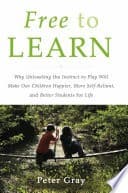
As for outcomes: the research base is thinner than Montessori's, but what exists is encouraging. Surveys of grown unschoolers — including work by the psychologist Peter Gray — consistently find them attending college when they choose to (admissions offices handle non-traditional transcripts more routinely than parents fear), clustering in creative and entrepreneurial careers, and overwhelmingly reporting satisfaction with their childhoods. What the research cannot do is guarantee the result for any particular child, and thoughtful unschoolers are candid that the approach asks more of parents — in trust, presence, and tolerance for other people's doubt — than any curriculum ever will.
If the idea pulls at you but the leap feels too far, you are in good company. Many families arrive gradually: they start with a structured homeschool, watch what their child does in the free hours, and slowly hand over more of the map. The books and talks tagged on this page — Holt, Gray, Dodd, Llewellyn — are the classic on-ramp, and the deschooling resources are the gentlest first step.