Browse
🏗️

For

School Founders & Administrators

Entrepreneurs and educators starting microschools, learning centers, or alternative programs.

46 resources tagged for this audience

A New Crop of School Models Expands Choice

Education policy researcher Michael McShane surveys the emerging landscape of microschools, hybrid homeschool programs, and learning pods — intentionally small schools of 15 students or fewer — giving families new alternatives beyond traditional district and charter schools. The piece examines their legal status, diversity of models, and policy implications.

Education Next·Jan 2024
View
📰Article

Homeschool Co-ops: Building Community and Academic Depth Through Collaboration

An exploration of how homeschool cooperatives — groups of families who share teaching responsibilities and pool resources — provide structured social interaction, accountability, access to specialized subjects like lab science and foreign languages, and the community that solo homeschooling families often find hardest to replicate.

Stand Together·Jul 2023
View

Pod Schools and Micro-Schools: The Future of Education

A deep-dive conversation on the explosive growth of microschools and pandemic pods — small learning communities of 5–15 students — exploring the diverse models emerging across the country and what they reveal about what families are hungry for beyond large traditional schools.

31 min·Reinventing School
View
🎬Video

How to Start a Homeschool Co-op: A Step-by-Step Guide

A practical walkthrough for families interested in forming a homeschool cooperative, covering legal structures, dividing teaching responsibilities, finding a venue, building community agreements, managing conflict, and navigating the range of models from enrichment co-ops to full academic co-ops with credit-bearing courses.

23 min·HSLDA
View

The Power of a Democratic Classroom

Drawing on case studies from Sudbury Valley School, Brooklyn Free School, and Albany Free School, this feature explores what decades of democratic schooling reveal about the connection between student autonomy and intrinsic motivation — and what conventional schools can learn from giving students genuine authority over their learning environment.

Edutopia·Oct 2022
View

What Is Self-Directed Education? — Alliance for Self-Directed Education

The Alliance for Self-Directed Education explains what self-directed education actually means — the distinction from unschooling, democratic schooling, and homeschooling — and why centering children's agency and intrinsic motivation is both philosophically grounded and practically achievable.

10 min·Alliance for Self-Directed Education
View
🎬Video

Making Learning Visible: Documentation in Reggio-Inspired Schools

An exploration of pedagogical documentation — the Reggio Emilia practice of photographing, recording, and reflecting on children's learning processes — showing how it transforms teaching from delivery to research, deepens children's revisiting of their own ideas, and makes the invisible visible for families and the community.

28 min·Inspired EC
View

The Outdoor Classroom Ages 3-7: Taking the First Steps Outside

A practical, research-backed guide for early childhood educators and parents who want to take learning outside, covering risk-benefit assessment, seasonal curriculum planning, nature journaling, loose parts play, and how to work with parents and administrators to establish and sustain a forest school or outdoor learning program.

Lindsey Whitworth·2016
View

Setting the Standard for Project Based Learning: A Proven Approach to Rigorous Classroom Instruction

From the Buck Institute for Education — the world's leading PBL organization — this comprehensive handbook provides the Gold Standard PBL framework with detailed guidance for designing, assessing, and managing projects that develop deep content knowledge and 21st-century competencies across subjects and grade levels.

John Larmer, John Mergendoller, Suzie Boss·2015
View

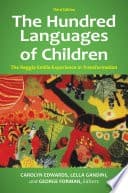
The Hundred Languages of Children: The Reggio Emilia Experience in Transformation

The definitive scholarly and practical anthology on the Reggio Emilia approach, edited by Carolyn Edwards, Lella Gandini, and George Forman. This third edition gathers essays from the founders and leading practitioners, covering the philosophy, documentation practices, teacher role, and global influence of the Reggio approach.

Carolyn Edwards, Lella Gandini, George Forman·2011
View

We are partially ad-funded!