Our Guide to Classical Education
The Oldest New Idea in Education
Classical education makes a claim no other approach on this site quite makes: that the fundamental questions of teaching were answered a long time ago, and answered well. For over two thousand years — from the Greek academies through the medieval universities to the founding generation of America — Western education followed a recognizable pattern: master language deeply, learn to reason precisely, practice expressing truth persuasively, and do all of it in conversation with the greatest minds who came before you. The modern classical revival is, at heart, an act of recovery: the conviction that we did not outgrow this education, we merely misplaced it.
The organizing structure is the Trivium — grammar, logic, rhetoric — which the revival (following Dorothy Sayers' famous 1947 essay) maps onto childhood itself. Young children delight in memorizing and chanting, so the grammar stage feeds them the raw material of every subject: phonics, math facts, dates, Latin declensions, poems. Around the middle-school years, children begin arguing with everything — so the logic stage teaches them to argue well, with formal logic and the habit of asking why. Adolescents care intensely about self-expression, so the rhetoric stage trains them to write and speak with clarity, elegance, and honesty. The insight is that each stage works with the grain of the child's development rather than against it.
What the Great Books Are For
The reading list is the most visible feature of classical education: Homer, Plato, Virgil, Augustine, Dante, Shakespeare, Austen, Dostoevsky. But the point is widely misunderstood. Classical educators do not assign the Great Books because they are old, or as cultural trophies. They assign them because these are the books in which the permanent human questions — What is justice? What is a good life? What do we owe each other? — are argued at the highest level ever achieved, and because a student who has personally wrestled with Antigone's dilemma or Ivan Karamazov's rebellion is armored against shallow thinking in a way no skills curriculum can replicate.
The honest criticism — that the traditional canon is overwhelmingly male and European — deserves a straight answer rather than a defensive one. Thoughtful classical programs increasingly read the tradition alongside its finest critics and its non-Western counterparts, treating Frederick Douglass, Confucius, and Toni Morrison as participants in the same great conversation. When you evaluate a classical school or curriculum, this is a revealing question to ask: a program that says 'the conversation is bigger than Europe' has understood its own principles; a program that treats the booklist as a fortress may be teaching heritage rather than thinking.
The Latin Question, and Other Demands
Yes, Latin. The classical tradition keeps it not out of nostalgia but because it works as an engine: Latin grammar is the most systematic way ever devised to understand how language itself operates, roughly half of English vocabulary descends from it, and the discipline of translation trains precision of thought that transfers everywhere. That said, families should hear the quiet truth that many successful classical homeschoolers hold Latin loosely — starting it in late elementary, keeping it modest, and treating the child who falls in love with it as a bonus rather than the requirement.
The larger demand is rigor across the board. Classical education involves real memory work, daily math, substantial reading, and regular writing, sustained over years. Done well, the structure produces not drudgery but freedom — children who know things cold gain the confidence to think boldly with them. Done badly, it curdles into joyless drill. The difference is almost always whether the adults remember that wonder, not compliance, is the goal. If your child is drowning in flashcards and has not heard a great story read aloud in weeks, the method is being misapplied, not proven.
Choosing Your Classical Path
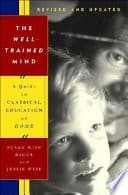
Classical education now comes in more forms than any other alternative approach. Homeschoolers can follow the rigorous, parent-led model laid out in The Well-Trained Mind; join a community like Classical Conversations that meets weekly for group instruction; enroll in classical charter schools (a rapidly growing, tuition-free option); choose a classical Christian school; or use online academies that teach the Great Books seminar-style over video. The Christian and secular streams of the revival differ in emphasis — many classical schools treat virtue formation and faith as inseparable from learning, while charter schools and secular curricula pursue the same rigor without the theology — so families of every conviction can find a workable door in.
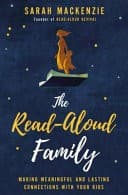
If the approach attracts you but the scale intimidates you, start with its two most portable practices. First, read excellent books aloud far past the age when your child can read alone — the dinner-table discussion of a great story is the rhetoric stage in embryo. Second, let your young child memorize beautiful things: poems, speeches, songs. Memory filled with beauty is the classical foundation, and it costs nothing. The books and resources tagged on this page — Sayers' essay and Bauer's guide especially — will show you the rest of the road.