Our Guide to Waldorf / Steiner
The World Waldorf Builds
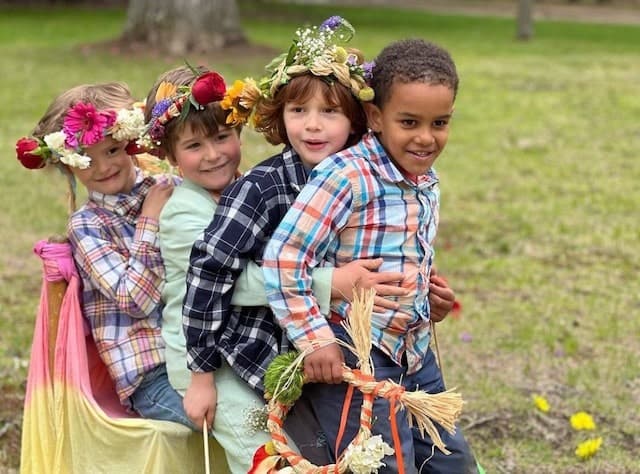
Walk into a Waldorf kindergarten and the first thing you notice is what's missing: no alphabet friezes, no computers, no plastic. Instead there are silk cloths, beeswax crayons, wooden play stands, a pot of soup on the stove, and children deep in elaborate imaginative games. It looks less like a classroom than like an idealized home — and that is entirely deliberate. Waldorf education is built on Rudolf Steiner's conviction that childhood unfolds in distinct developmental stages, and that the early years belong to imagination, imitation, and the body, not to abstract academics.
This is the approach's most distinctive — and most debated — feature: formal reading instruction typically waits until around age seven. In a culture anxious about early literacy, that patience can look like negligence. Waldorf educators argue the opposite: that pushing abstraction before a child's inner readiness produces shallow skill and eroded confidence, while a rich oral culture of stories, songs, and verses builds the deep language foundation that makes later literacy quick and joyful. Families who choose Waldorf tend to find this rhythm humane and beautiful; families who leave often cite it as the sticking point. Either way, you should know it going in.
From first grade onward, academics arrive — but always through the arts. Children learn letters by drawing them out of stories, math through rhythm and movement, botany and geometry through careful colored-pencil illustration in self-made 'main lesson books' that serve as their textbooks. A 'main lesson' block runs the same subject daily for several weeks, allowing genuine immersion. Ideally, one class teacher accompanies the group for many years, coming to know each child deeply.
About Anthroposophy — the Honest Conversation
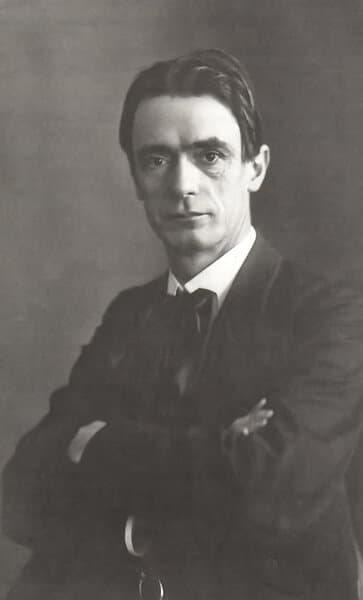
You cannot evaluate Waldorf education honestly without addressing its roots. Steiner was not primarily an educator but the founder of Anthroposophy, a spiritual philosophy encompassing everything from agriculture (biodynamics) to medicine. Waldorf pedagogy grows out of Anthroposophical ideas about child development — the seven-year stages, the emphasis on rhythm, the delayed academics. Anthroposophy itself is not taught to children, and Waldorf schools enroll families of every faith and none. But the worldview shapes the culture, and families vary enormously in how comfortable they are with that.
Two candid notes. First, some of Steiner's early-twentieth-century writings contain racial theories that are indefensible by any modern standard; contemporary Waldorf associations have formally repudiated them, and you should feel free to ask any school directly how they handle this history. Second, Waldorf communities have historically had lower vaccination rates and strong anti-screen convictions — positions individual families find either refreshing or alarming. Visit, ask blunt questions, and judge the actual school in front of you rather than the movement's reputation in either direction.
What Families Actually Experience
The families who thrive in Waldorf describe children who draw, sing, knit, build, and tell stories with unusual richness — and who seem to have been granted a longer, more protected childhood than their peers. The festival rhythm of the year (lantern walks, harvest festivals, May fairs) creates a community texture that many parents value as much as the pedagogy. Waldorf graduates frequently describe themselves as flexible thinkers with a strong aesthetic sense and an unforced love of learning.
The friction points are just as real. The no-media expectation extends into the home, and half-hearted compliance creates tension both with the school and within the family. Academic pacing that trusts late bloomers can mask genuine learning difficulties if teachers are not vigilant — ask how a school screens for dyslexia and related differences, since the reading-later philosophy can delay identification. And because 'Waldorf' is applied loosely, quality and dogmatism vary school to school: some are warm and pragmatic, others rigid in ways that surprise families expecting artistic freedom.
Waldorf at Home
Waldorf-inspired homeschooling is a well-trodden path with dedicated curriculum providers, and in some ways the approach suits home life beautifully — its rhythms of baking, gardening, seasonal crafts, and storytelling were drawn from the home in the first place. The core practices translate directly: a predictable daily rhythm, rich read-alouds and oral storytelling, handwork, outdoor time in all weather, and main-lesson blocks built around narrative.
The honest challenge is that authentic Waldorf practice asks the parent to develop real skills — storytelling, watercolor painting, handwork, singing — and to hold a media-light household culture. Families who love it describe it as transformative for the whole home, not just the child. If you are drawn to the aesthetic but unsure about the full philosophy, start with the early-years practices (rhythm, stories, nature, handwork), which are broadly supported by child-development research, and decide later how far you want to follow the curriculum into the grades. The books and resources tagged on this page will take you as deep as you want to go.