Our Guide to Forest School / Nature-Based
There's No Such Thing as Bad Weather
The Scandinavian proverb that anchors forest school culture — 'there is no bad weather, only bad clothing' — is more than cheerful stoicism. It encodes the approach's central belief: that children belong outdoors in every season, and that the sanitized, climate-controlled, risk-audited childhood we have built indoors is the anomaly, not the norm. Forest school takes young children into the same woodland, week after week, through rain, frost, mud season, and summer — and treats that repetition as the curriculum itself. The land becomes a familiar teacher whose lessons change with the weather.
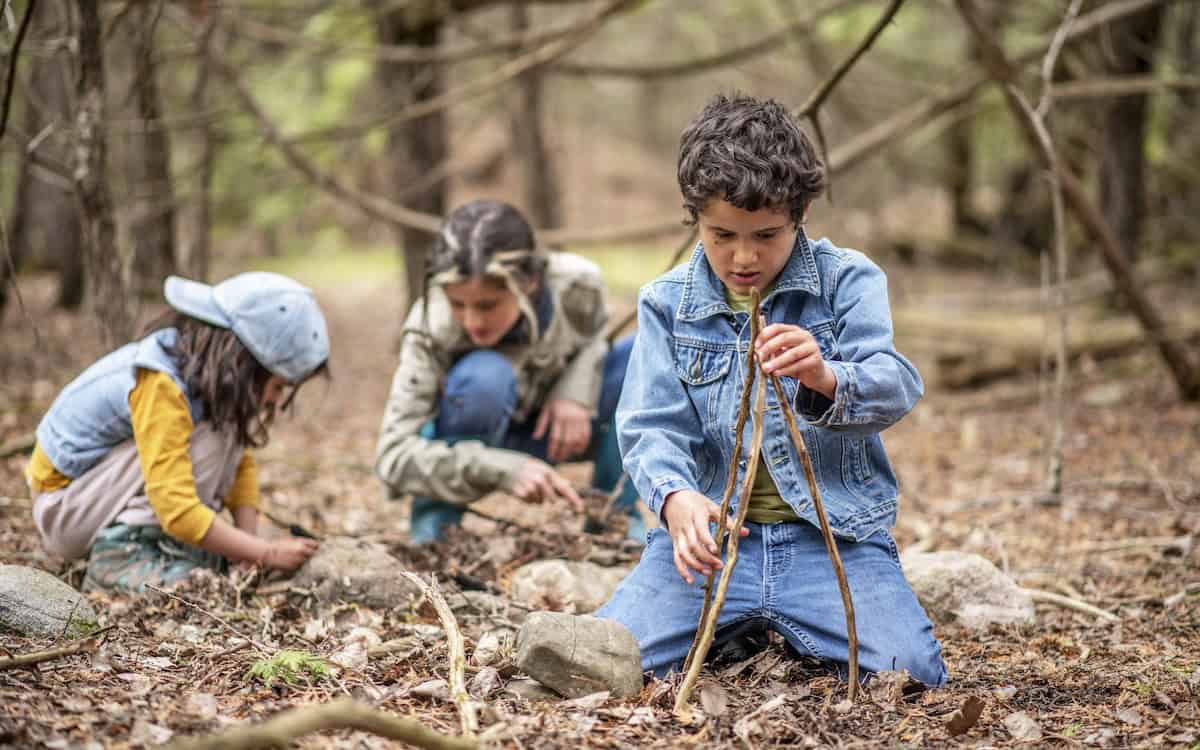
What actually happens under the trees looks deceptively simple: children build dens, climb, dig, whittle, cook over fires, track animals, invent games, and get magnificently dirty. A trained leader shapes the session lightly — opening circle, safety boundaries, perhaps an invitation like rope or clay — but the children's own curiosity directs the substance. The pedagogical bet is that this kind of self-chosen, physical, slightly risky play builds exactly the capacities that worksheets cannot: persistence, cooperation, spatial reasoning, emotional regulation, and the bone-deep confidence of a child who has learned what her body and judgment can do.
Risk Is the Feature, Not the Bug
The fire and the knife are usually what parents ask about first, and forest school's answer is its most distinctive contribution: children are taught to do genuinely risky things competently, rather than being protected from them indefinitely. A four-year-old learns the fire circle rules before ever approaching flame; a six-year-old earns tool use through demonstrated care. The framework is 'risk-benefit assessment' — leaders weigh not only what could go wrong but what is lost when children never test themselves. A growing research literature on 'risky play' supports the intuition: children denied manageable risks do not become safer; they become either fearful or reckless, having never calibrated their own limits.
Parents routinely report that the child who is a whirlwind indoors is focused and calm in the woods — an observation consistent with a substantial body of research linking regular nature time to improved attention, lower stress, and better mood in children. Forest school is not therapy, but many families arrive at it precisely because something about conventional indoor settings was grinding their particular child down.
What to Look For in a Program
'Forest school' is used loosely, so discernment matters. The genuine article has three markers: long-term regularity (the same group returning to the same land weekly, not a one-off nature camp), trained leadership (in the UK a formal Level 3 certification; elsewhere look for equivalent training and ask about it directly), and child-led ethos (sessions shaped by children's interests rather than a nature-themed lesson plan delivered outdoors). A program can be a lovely outdoor experience without these and still be worth your money — it just isn't forest school, and won't deliver the slow-built relationship with place that the model is designed around.
Ask candidly about ratios, fire and tool policies, and what a session looks like when it pours. The answer to the rain question is the fastest quality test available: a real forest school leader answers with enthusiasm about tarp shelters and puddle physics; a fair-weather program reveals itself immediately.
Bringing It Home — and Its Limits
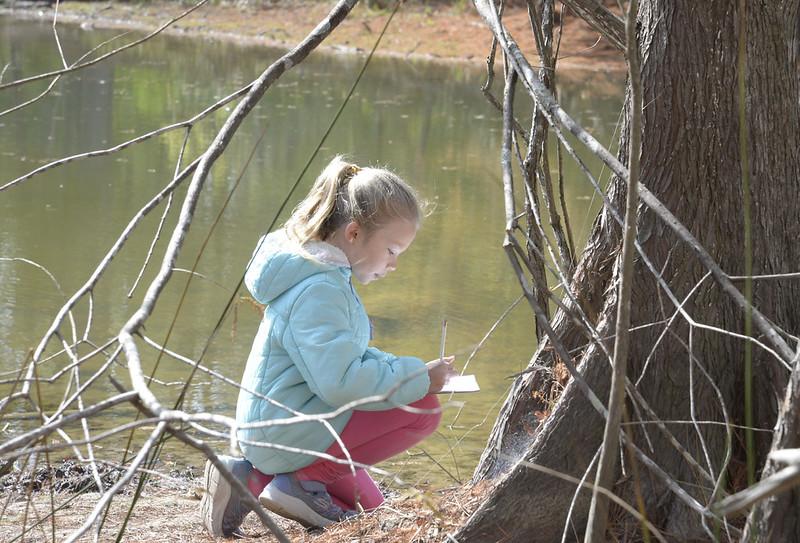
Families without a program nearby can adopt the core practice directly: a 'sit spot' or family nature hour in the same green place every week, in all weather, with waterproofs for everyone and no agenda beyond attention. The repetition is the ingredient people skip — visiting a new park every week produces recreation, while returning to one place produces relationship: your child will notice the season's first frost heave, the returning wrens, the fox trail, because she knows what the place looked like last week. Add a mud kitchen, a climbing tree, whittling with supervision, and the home version is remarkably close to the real thing for young children.
Two honest limits. First, forest school as commonly practiced is an early-childhood and primary-age model; it does not by itself teach reading or arithmetic, and families using it as a homeschool component pair it with academic instruction indoors — a pairing that works beautifully, as many Charlotte Mason and nature-based homeschoolers demonstrate. Second, access is unevenly distributed: urban families, families in extreme climates, and those without transport face real barriers, though city programs in parks and even schoolyard copses are multiplying. The resources tagged on this page include starting points for both finding programs and building your own family practice.