Our Guide to Nature-Based Learning
The Deficit Nobody Diagnosed
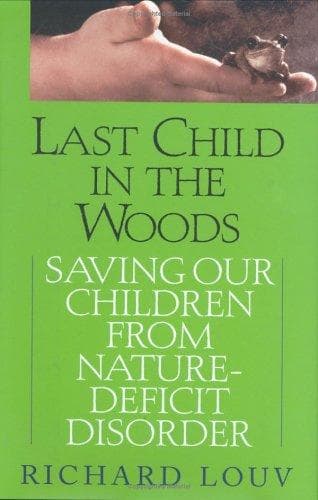
In the span of roughly one generation, childhood moved indoors. The free-range roaming that was unremarkable in the 1970s — hours outside, unsupervised, until the streetlights — contracted to scheduled, fenced, adult-monitored fragments, while screens absorbed the difference. Richard Louv's Last Child in the Woods (2005) gave the shift its famous name, 'nature-deficit disorder' — deliberately not a medical diagnosis, but a cultural one — and assembled the evidence that the loss was not sentimental but developmental: children need unstructured contact with the natural world for attention, emotional regulation, physical competence, and mental health, and they were not getting it.
The research that followed has largely vindicated the alarm. Studies across countries associate regular nature time with improved concentration (including in children with ADHD), lower stress and anxiety, better sleep, reduced myopia risk from outdoor light exposure, and richer motor development from uneven-terrain play. None of this requires wilderness: the measurable effects appear with parks, gardens, schoolyard trees, and vacant-lot ecosystems. Nature-based education is the pedagogical response — the decision to treat this body of evidence as a design requirement for childhood rather than a footnote to it.
Broader Than Forest School
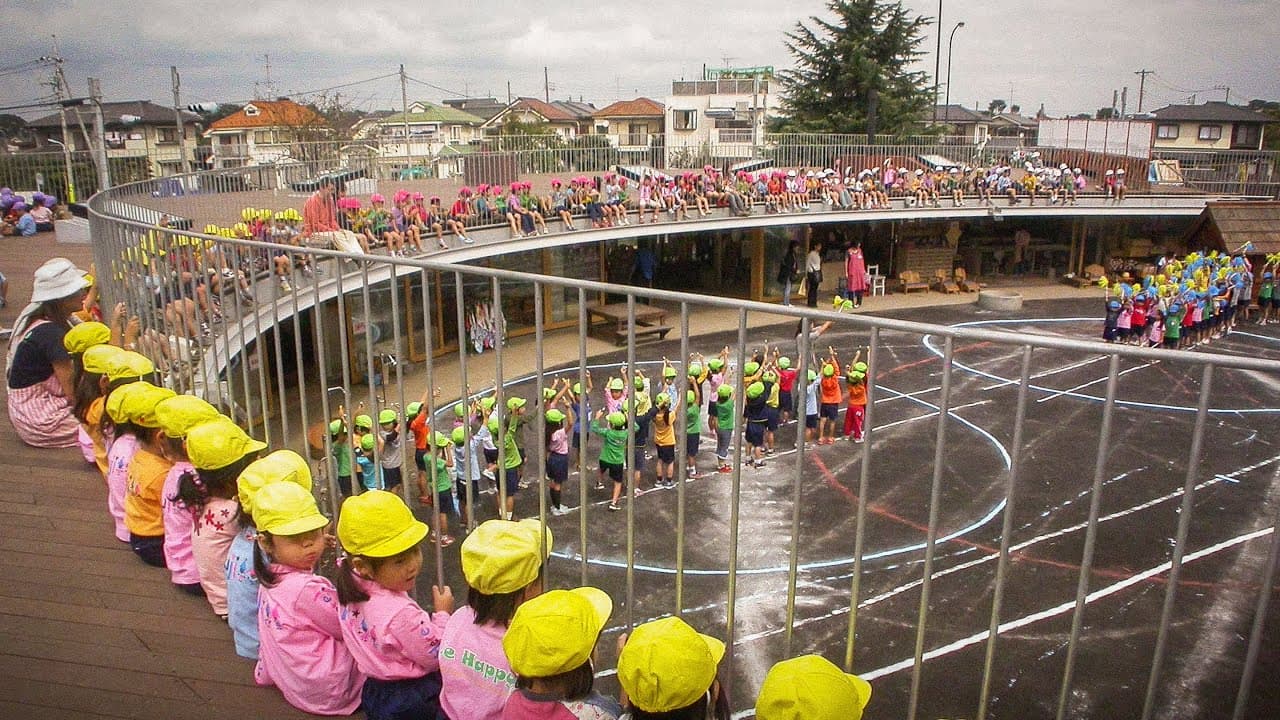
Nature-based education is best understood as the umbrella, with forest school as its most famous spoke. Under the umbrella: outdoor preschools and 'nature kindergartens' (a rapidly growing licensed-childcare category, several states now having created regulatory pathways for fully outdoor programs); garden-based learning, where the school garden functions as science lab, math manipulative, and lunch source at once; place-based education, which roots academics in the local watershed, geology, economy, and history — learning your own square mile deeply as the foundation for understanding anywhere; biophilic classroom design, which brings light, plants, and living systems into conventional buildings; and family practices as simple as the weekly sit-spot. Forest school proper — the specific UK/Scandinavian model of long-term, leader-facilitated woodland sessions — has its own guide on this site.
What unifies the spokes is a shared claim about how knowledge forms: that abstraction should grow out of embodied experience, not precede it. The child who has planted, watered, harvested, and composted holds the nutrient cycle in her hands before she ever meets the diagram; the diagram then names what she already knows. David Sobel, the movement's most practical theorist, argues that ecological understanding — and environmental ethics — develop in exactly this order: first love the place, then learn its workings, then defend it. Environmental doom delivered to children who have no relationship with nature produces anxiety; the same information reaching children who know a place produces stewards.
What It Looks Like in Practice
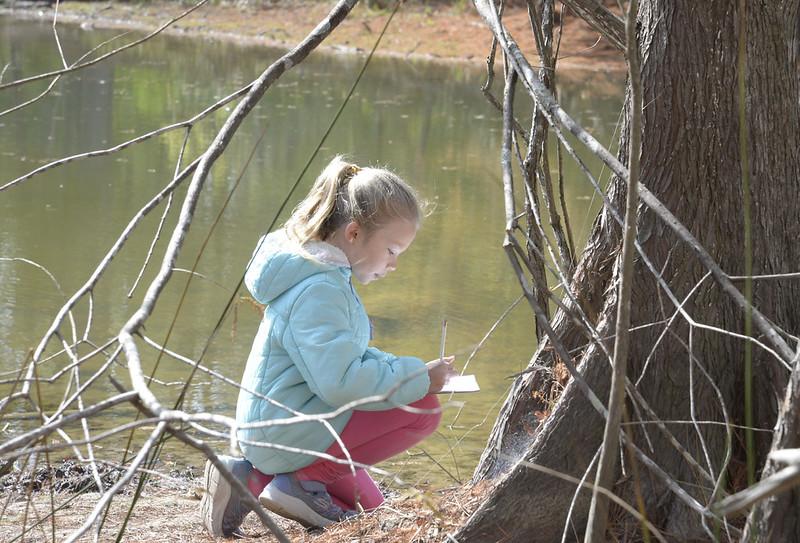
In early childhood, the practice is gloriously low-tech: mud kitchens, loose parts, puddles, sticks, and the freedom to engage them in real clothes that are allowed to be ruined. The skills forming — risk calibration on the climbing tree, executive function in the elaborate acorn economy, pre-science in the worm census — are invisible only to adults who equate learning with tables and chairs. In elementary years, the nature journal becomes the spine: regular observational drawing and writing that trains attention with a precision worksheets never touch, feeding directly into formal science later. For adolescents, the mode shifts to fieldwork and stewardship — water-quality monitoring, trail building, citizen-science data collection, wilderness expeditions — where nature stops being a setting and becomes a domain of real work and real responsibility.
For homeschoolers, nature-based practice is less a curriculum purchase than an orientation: it pairs naturally with Charlotte Mason (whose nature study tradition anticipated the research by a century), forest-school-style outdoor days, and ordinary academics conducted with the door open. The non-negotiable ingredient is regularity — the same places, revisited across seasons, until the child holds a year of a landscape in memory. Novelty entertains; repetition builds relationship, and relationship is the mechanism.
Objections and Access
'We live in a city.' The research and the practice both answer: urban nature counts. Street trees, park fragments, container gardens, pigeons and their politics, the weeds conquering the parking lot — attention, not acreage, is the active ingredient, and some of the movement's most creative programs run in the densest neighborhoods. The equity concern is real — green space is unevenly distributed, and unevenly along income lines — which is precisely why advocates push for schoolyard greening and public-land programming rather than treating nature as a private amenity. 'The weather.' The Scandinavian answer (no bad weather, only bad clothing) is glib but true; the practical answer is that gear is the entry fee, secondhand gear is cheap, and children complain about weather in direct proportion to the adults' complaints. 'Screens are the future; this is nostalgia.' The claim gets the trade-off backward: the developmental foundations nature time builds — attention, regulation, embodied confidence — are exactly the capacities a screen-saturated future will tax hardest. This is infrastructure, not sentiment.
Start this week, not next year: pick one green place within walking or short driving distance, take the children there for an unhurried hour, and put it on the calendar for the same time next week. That repetition — more than any program, purchase, or philosophy — is the whole method in embryo. The books and organizations tagged on this page, Louv and Sobel first among them, will meet you wherever that hour leads.