Browse
🎒

For

Preschool Age (3–5)

Families with preschool-age children exploring play-based and early childhood programs.

28 resources tagged for this audience

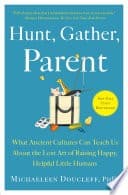
Hunt, Gather, Parent: What Ancient Cultures Can Teach Us About the Lost Art of Raising Happy, Helpful Little Humans

NPR science reporter Michaeleen Doucleff spent time with Maya, Inuit, and Hadzabe families studying how they raise cooperative, helpful, and emotionally regulated children without the power struggles and behavioral problems common in Western parenting. Her findings challenge the dominant parenting paradigm and point toward more autonomy-supportive, community-embedded approaches.

Michaeleen Doucleff·2021
View

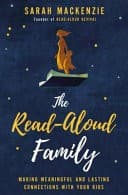
The Read-Aloud Family: Making Meaningful and Lasting Connections with Your Kids

Sarah Mackenzie makes the compelling case that reading aloud together is one of the most powerful and lasting investments parents can make — building vocabulary, empathy, love of learning, and family connection simultaneously. Packed with practical guidance and hundreds of book recommendations for every age.

Sarah Mackenzie·2018
View

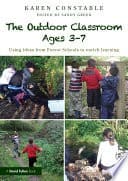
The Outdoor Classroom Ages 3-7: Taking the First Steps Outside

A practical, research-backed guide for early childhood educators and parents who want to take learning outside, covering risk-benefit assessment, seasonal curriculum planning, nature journaling, loose parts play, and how to work with parents and administrators to establish and sustain a forest school or outdoor learning program.

Lindsey Whitworth·2016
View

What Do Babies Think? — Alison Gopnik

UC Berkeley developmental psychologist Alison Gopnik reveals that babies are not blank slates but extraordinary learning machines — running rapid-fire experiments on the world. This widely-viewed TED talk reframes early childhood as the research and development division of the human species, with huge implications for how we design education.

18 min·TED
View

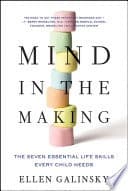
Mind in the Making: The Seven Essential Life Skills Every Child Needs

Ellen Galinsky synthesizes three decades of child development research to identify seven essential life skills — including focus and self-control, critical thinking, taking on challenges, and self-directed, engaged learning — that matter more for lifelong success than academic content knowledge. Essential reading for parents and educators designing learning environments.

Ellen Galinsky·2010
View

We are partially ad-funded!