Our Guide to Play-Based Learning
Play Is Not the Break From Learning
Watch a four-year-old run a pretend restaurant for an hour: she assigns roles and enforces them (executive function), negotiates when the cook quits (social cognition), maintains a fictional frame while tracking reality (symbolic thinking), invents prices and makes change with leaves (early math), and adjusts the entire scenario when a younger sibling toddles in (flexible planning). No worksheet on the market exercises half of those capacities at once. The foundational claim of play-based education is that this is not a charming break from learning — it is the most sophisticated cognitive workout available to young children, refined by evolution for exactly this developmental window.
The scientific pedigree is deep and unusually unanimous. Piaget showed children constructing understanding through active exploration; Vygotsky went further, demonstrating that in pretend play children operate above their everyday developmental level — 'a head taller than himself,' in his famous phrase — because sustaining a role demands self-regulation nothing else evokes. Modern developmental science has kept confirming the picture: the capacities that best predict long-term flourishing — attention control, working memory, self-regulation, social competence — are built most durably in playful, low-pressure contexts. The scientific question is largely settled. The cultural fight is not.
The Kindergarten Arms Race
Over the past few decades, formal academics have migrated steadily downward into kindergarten and preschool — more seat work, more assessment, less play — driven not by developmental research (which points the opposite direction) but by accountability systems and parental anxiety about 'readiness.' The natural experiment on the other side is Finland, where formal instruction begins at seven after play-centered early years, and which nonetheless produces world-class literacy: an existence proof that the early academic push is unnecessary. Research comparing early-reading regimes points the same way — children taught to read at five hold no lasting advantage over those who start at seven, and some studies find the later starters read with better comprehension and enjoyment, having paid a lower motivational price for the skill.
The deeper cost of the academic push is what it displaces and what it teaches. Every worksheet hour in a five-year-old's day is an hour not spent in the self-directed play where regulation and initiative actually form; and the child drilled early learns, alongside the letters, a lesson about learning itself — that it is performance for adult approval, scarce in joy. Play-based educators argue this early emotional imprint on 'what learning is' matters more than any head start, because it compounds for the next seventy years.
What 'Play-Based' Does and Doesn't Mean
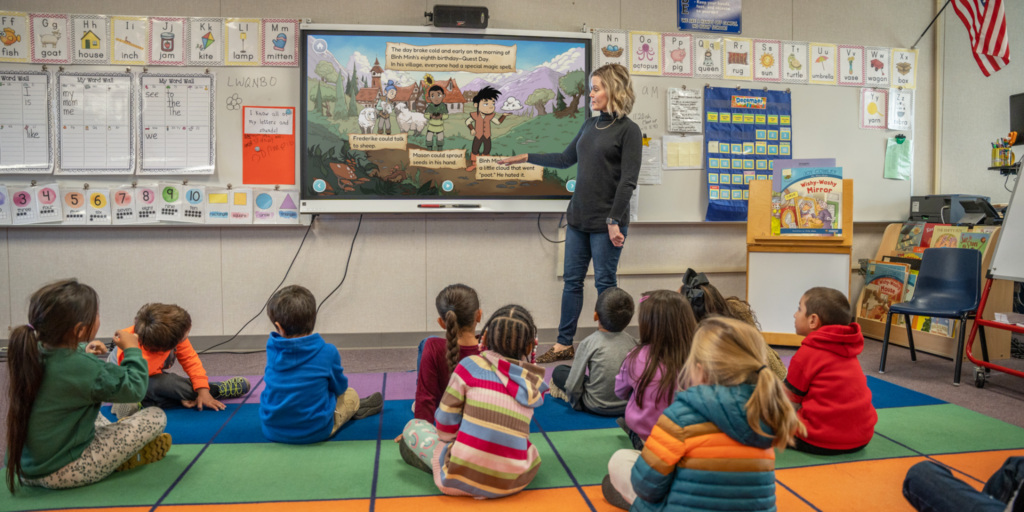
The approach is routinely mischaracterized by both its enemies and its lazier practitioners, so precision helps. Play-based does not mean adults do nothing. High-quality play-based practice is intensely intentional: environments provisioned to provoke (the clipboard and pencils placed in the pretend clinic, quietly inviting writing), teachers observing closely and extending play with a question or a prop at the right moment, and playful-but-guided experiences woven through the day — songs, stories, games with rules — alongside free play. Researchers call this the continuum from free play through guided play to playful instruction, and the strongest programs move fluently along it. What play-based excludes is the developmental mismatch: batch worksheets, extended seat time, and formal drill imposed on bodies and brains built to learn by doing.
Nor does play-based mean literacy and numeracy are neglected — the letters, sounds, counting, and comparing are all there, embedded where children actually meet them: the sign the restaurant needs, the score the game requires, the taller tower's measurement. Children in strong play-based programs arrive at formal schooling with the prerequisites intact and, more importantly, with their curiosity unspent.
Protecting Play at Home
For parents, the practice is half provision and half restraint. Provision: time (unscheduled hours are play's raw material, and the over-programmed week starves it), space that tolerates mess, open-ended materials (blocks, cloth, boxes, mud — the toy that does one thing entertains for a day; the material that does anything educates for a decade), and playmates of mixed ages when possible. Restraint is harder: resisting the urge to direct ('why don't you make it a fire station?'), to convert play into stealth lessons, to interrupt deep engagement for enrichment, and to fill every silence — because boredom is not a problem to solve but the pressure that precedes invention. Peter Gray's research on the decline of free play links its loss directly to rising childhood anxiety; the home that simply defends unstructured time is doing more than most curricula.
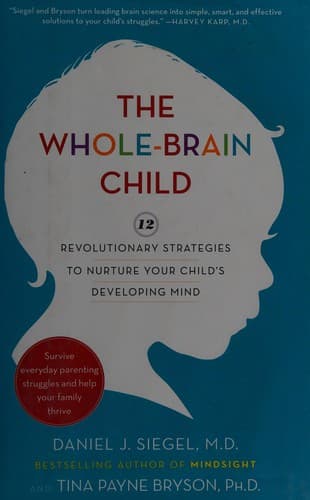
For homeschoolers of young children, play-based is arguably the default the movement's founders would recognize: a language-rich, materials-rich home, abundant outdoor time, read-alouds, real household work, and formal academics introduced gently as readiness appears — the pattern shared by Froebel's original kindergarten, Waldorf early years, Montessori's practical life, and the Finnish model alike. The books tagged on this page — Gray and Stuart Brown especially — make the full case, and the nature-based and Reggio Emilia guides on this site describe play-based practice in its two richest settings. The one-sentence summary of all of it: in early childhood, protecting play is not lowering the bar. It is the bar.