Our Guide to Deschooling
Two Meanings, One Word
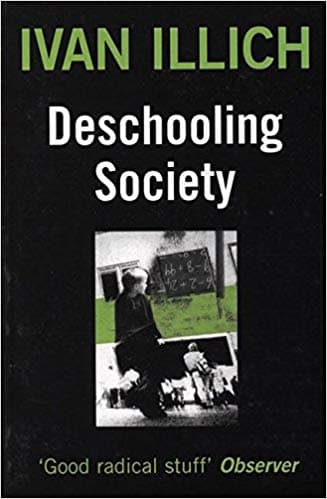
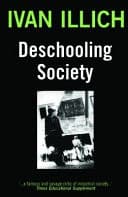
'Deschooling' does double duty in the alternative education world, and the two meanings are worth separating at the outset. The first is philosophical: Ivan Illich's radical 1971 argument that institutional schooling itself — not bad schools, but the institution as such — deforms learning and society. The second is practical and far more commonly meant today: the recovery period a family goes through after leaving conventional school, before formal homeschooling begins. The meanings are related — the practical usage descends directly from the philosophy — but one is a critique of civilization and the other is advice for your first semester. This guide covers both, because most families who come to alternative education pass through the practical version and eventually get curious about the deeper one.
Illich's claim, stated plainly, was that schools teach one lesson above all others: that learning is a commodity delivered by institutions, that it must be consumed in graded doses, and that your worth is your credential. He called this the 'hidden curriculum,' and argued it trains people into lifelong dependence on institutions of every kind. His alternative — 'learning webs' connecting anyone who wants to learn something with peers, mentors, and tools, no enrollment required — read as utopian in 1971 and reads today like a description of the internet's best half. Whatever you make of his conclusions, the questions he forces are the deepest in this catalog: What is school actually for? Who benefits? What would education look like if we built it fresh?
The Practical Version: Recovery After School
Now the meaning you will encounter in every homeschool forum. When a child leaves conventional school, they carry school's operating system with them: waiting to be told what to do, asking whether things count, performing interest for approval, treating learning as the unpleasant price of free time. Deschooling is the deliberate fallow period that lets this operating system fade — a stretch of weeks or months with no curriculum, no lessons, and no educational pressure, in which the family simply lives: reads, cooks, walks, plays, visits places, talks. The child sleeps more than seems reasonable, plays more than seems productive, and slowly — this is the part parents must take on faith until they see it — starts asking questions again because they want the answers.
The community's rule of thumb is one month of deschooling per year the child spent in school; treat this as folk wisdom about scale (longer than a week, shorter than forever), not a formula. The deeper truth the rule encodes: the recovery is real, it takes longer for children who found school more bruising, and rushing it is the classic first-year homeschooling mistake. Families who skip deschooling and reproduce the classroom at home in September routinely hit a wall of resistance by November and conclude, wrongly, that homeschooling failed — when what failed was skipping the transition.
Deschooling Is Mostly for Parents
Here is what veteran home educators say almost unanimously: the child's deschooling is the easy half. The parent's is harder and matters more, because the parent spent years longer in school and internalized its operating system more deeply. It surfaces as the panic when a Tuesday contains no measurable output; the urge to convert every museum trip into a quiz; the reflexive sorting of activities into 'educational' and 'wasted'; the phantom fear of a truant officer who, in most states, does not exist in the imagined form. (What your state actually requires is documented in our legal section — read the real rules once and retire the imaginary ones.)
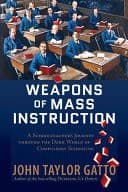
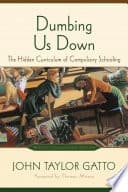
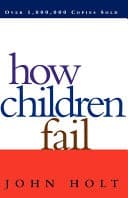
The work of parental deschooling is learning to see learning without institutional markers: noticing that the Minecraft session involved planning and proportion, that the argument about dinner involved rhetoric, that boredom precedes nearly every burst of creativity if allowed to ripen. Reading during this period helps enormously — Holt and Gatto are the traditional companions, with Illich for the philosophically hungry — not because they supply a method, but because they systematically dismantle the assumptions that make school-shaped anxiety feel like common sense.
After the Fallow Season
Deschooling ends in one of two ways, both fine. Some families emerge into structure: rested and reacquainted with their child, they choose a method — Charlotte Mason, classical, eclectic, whatever fits the actual child they have been observing — and begin it with far better aim than they would have had in the panicked first month. Others discover the fallow season quietly became the education: the child's questions are driving real learning, the parent has learned to feed rather than direct it, and the family has backed into unschooling and sees no reason to stop. The deschooling period is, among other things, the best diagnostic instrument in home education — it shows you who your child is when no one is grading them.
As for Illich's grander project: no country has deschooled society, and his critique remains more diagnosis than program, as even admirers concede. But his fingerprints are on everything in this catalog — unschooling took his premises home, democratic schools institutionalized his anti-institutionalism, and every learning co-op and skill-share is a small learning web. Families who read him tend to homeschool differently afterward: less like operators of a miniature school, more like custodians of a child's access to the world. That shift, more than any schedule change, is what deschooling ultimately means.