Justification for alternative education
A personal case for alternative education: how traditional schooling eroded one father's love of learning, why the pace of technological change demands adaptable thinkers over credential-holders, and what he and his wife are trying to preserve in their own kids.
I have never been a strong reader. But when I was small, I'd listen to stories, and enjoy the experience of consuming books with my parents. Then school happened, and the reading lists arrived, and somewhere between the mandatory annotations and the five-paragraph essays, I stopped caring about reading and books.
I don't think that's a coincidence.
This is the thing nobody quite says out loud when we talk about education reform: that compulsory schooling, for all its stated intentions, can be genuinely good at killing the things it claims to cultivate. Curiosity. A love of learning. The confidence to figure things out on your own. I don't say this as a polemic—I say it as someone who came out the other side of twelve years of traditional schooling and had to spend a decade rebuilding habits of mind that, in retrospect, I had naturally as a five-year-old.
What School Prepared Me For (And What It Didn't)
I'm not entirely negative about traditional public school. It certainly taught others around me to sit still, meet deadlines, navigate institutions, and perform under artificial pressure. Those are relevant skills. But when I look at the actual shape of adult life—freelancing, entrepreneurship, parenting, managing my own health and finances, trying to understand a world that rewrites itself every few years—I notice that the curriculum was oddly silent on most of it.
Nobody taught me how to read a contract, evaluate a news source, manage anxiety, build a savings habit, have a hard conversation, or tolerate uncertainty. These are the things adulthood actually runs on. Instead, I learned the quadratic formula, which I have used exactly zero times since 1998.
The conventional defense is that school teaches you how to learn, not just what to learn. But I'm skeptical that this is what actually happens for most kids. What school mostly teaches, in my experience, is how to learn things you don't care about, on someone else's timeline, in order to pass a test and then forget them. That's a very specific skill. It's not nothing. But it's not the same as intellectual autonomy.
The World Is Moving Too Fast
Here's the part that feels genuinely urgent to me, not just philosophical: the half-life of specific knowledge is collapsing.
When I was in school, the advice was to pick a field, get credentialed, and build expertise that would carry you through a career. That model is under enormous strain. Industries that didn't exist ten years ago are now major employers. Jobs that seemed stable are being automated or restructured. The skills that made someone employable in 2010 may not be the ones that matter in 2030—and we don't actually know what will matter in 2040.
In that environment, what's the most durable thing you can give a child? I'd argue it's not any particular body of knowledge. It's the disposition to keep learning. The capacity to sit with confusion until it becomes understanding. The confidence to say "I don't know this yet, but I can figure it out." The creativity to make something from nothing. The resilience to fail and try again.
These aren't just nice-sounding platitudes. They're the actual substrate of adaptability. And they're exactly what gets ground down when learning is experienced, year after year, as something done to you rather than something you do.
What We're Trying Instead
When my wife Rebecca and I started talking seriously about how we wanted to raise our kids, we kept coming back to the same question: what do we actually want for them? Not what credentials, not what achievements—what qualities?
We want them to be curious. We want them to know how to play, really play, in the sense of being genuinely absorbed in something for its own sake. We want them to be intrinsically motivated—to do hard things because they find them interesting or meaningful, not because someone is measuring them.
We don't know exactly how this story ends. We're still figuring it out, honestly. But we made a decision that we wanted to take responsibility for it rather than outsource it entirely to a system that wasn't designed with our specific kids in mind.
Alternative education isn't one thing—it's a wide spectrum of approaches, from structured homeschooling to unschooling to democratic microschools to forest schools. What they share is a willingness to question the default assumptions: that learning happens best in age-segregated classrooms, that subjects should be siloed, that standardized tests tell us what we need to know, that the same pace and approach should work for every child.
We're not certain we're right. We hold our choices with some humility. But we are certain that the question is worth asking—that "this is just how school works" is not, by itself, a sufficient reason to hand over the next twelve years of a child's intellectual formation.
The Thing I Most Want to Preserve
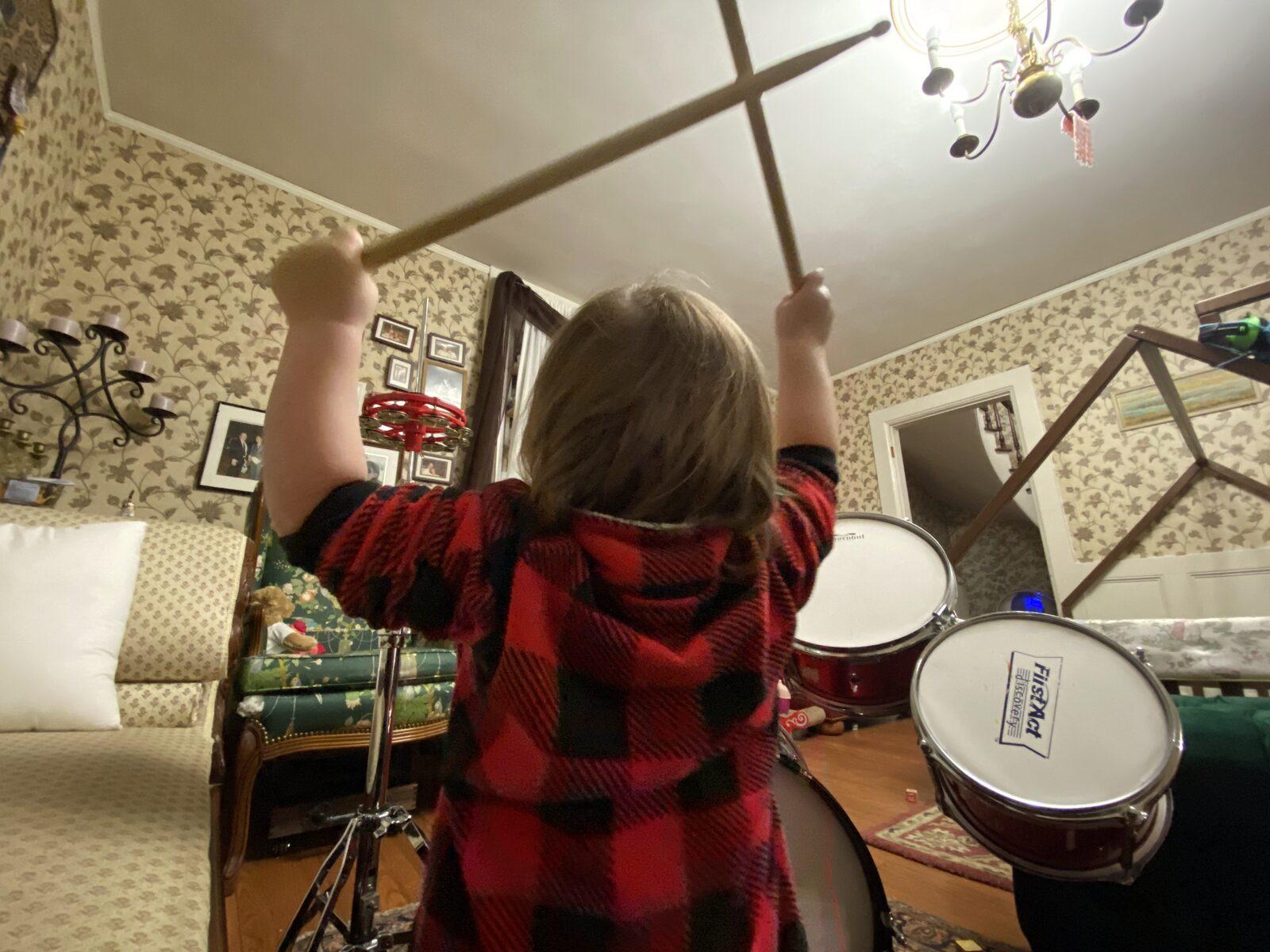
My son still loves learning. He asks questions constantly. He gets genuinely excited about things that interest him, and he pursues them with an intensity that I find both exhausting and wonderful. He doesn't yet know that learning is supposed to be effortful and joyless. He hasn't yet been sorted, ranked, and told where he falls. I want to protect that for as long as I can. Not to shelter him from difficulty—difficulty is part of learning, and I want him to develop genuine persistence. But there's a difference between the productive struggle of working on something you care about and the demoralizing grind of sitting through something that feels irrelevant to your life.
Maybe I'm wrong about this. Maybe the structure and rigor of traditional schooling would serve him well. We'll keep watching and adjusting. But when I think about what I most want to give him, it's simple: I want him to still love reading when he's thirty. I want him to still be curious. I want him to look at a problem he doesn't understand and feel something closer to interest than dread.
That seems like the right goal. Everything else is just strategy.