Browse Resources

25 resources matching your filters

Learn Latin through Daily Practice

The article offers practical strategies for integrating Latin into a homeschool curriculum through consistent daily habits and accessible resources. It provides actionable advice for parents seeking to strengthen language skills within a faith-based educational framework.

The Old Schoolhouse MagazineΒ·Apr 2026
View
Provider

Classical Education Myth #2: Why Learn Latin? The Truth Behind Classical Education

Classical Conversations addresses the common objection that Latin is a 'dead language' β€” explaining how studying Latin builds grammatical structure, vocabulary roots, and the kind of precise linguistic reasoning that transfers across disciplines.

Classical ConversationsΒ·Apr 2026
View

Learning Latin and Loving Our Distant Neighbors

Drawing on Charlotte Mason's concept of 'the democracy of the dead,' Dr. Matthew Bianco argues that studying Latin is an act of loving our distant neighbors across time. Classical language study cultivates attentiveness to human voices across centuries, building the kind of moral imagination that Charlotte Mason believed was the true purpose of education.

CiRCE InstituteΒ·Mar 2026
View

The Family Book of the Month Club (Or: How to Keep Your Young Adults Reading) - Afterthoughts

A homeschooling parent shares a practical strategy for encouraging young adult reading habits within a Charlotte Mason and classical education framework, offering actionable advice for families aiming to foster a lifelong love of books.

Afterthoughts by Brandy VencelΒ·Dec 2025
View

Why Classical Education Excels at Civic Education

Robert C. Thornett argues that classical education, grounded in the Western liberal arts tradition and great texts, uniquely prepares students for democratic citizenship by cultivating shared cultural understanding and virtue. The approach fosters nuanced discourse about conflicting viewpoints while engaging timeless questions about leadership and the common good.

Education NextΒ·Sep 2025
View

Homeschooling Styles and Methods: 8 Popular Approaches Explained

A practical, candid overview of eight popular homeschooling approaches β€” including Classical, Charlotte Mason, Eclectic, Unschooling, and more β€” with honest pros, cons, and guidance for families deciding which style fits their children and lifestyle.

25 minΒ·Calm in the Chaos Homeschool
View

What a Living Book Sounds Like β€” Simply Charlotte Mason

Simply Charlotte Mason demonstrates the heart of Charlotte Mason's 'living books' philosophy β€” what makes a book truly 'alive' with ideas versus a dry textbook β€” with read-aloud examples across history, science, and literature so parents can hear the difference for themselves.

16 minΒ·Simply Charlotte Mason
View

The Classical Learning Test Takes Aim at the SAT-ACT Duopoly

Education Next profiles the Classical Learning Test (CLT), a college admissions test designed around the Western canon and classical education values, examining whether it offers a genuine alternative to the SAT/ACT for classically educated students and the growing number of colleges aligned with classical or faith-based academic traditions.

Education NextΒ·Aug 2022
View
🎬Video

Classical Education and the Trivium: A Deep Dive

A clear, substantive explanation of the classical trivium β€” grammar, logic, and rhetoric β€” and how these three stages map to different developmental periods in childhood. The video explains why classical educators prioritize narrative, memorization, and dialectic at different ages, and how this differs fundamentally from skill-and-drill approaches.

21 minΒ·Classical Academic Press
View

Classical Education β€” The Trivium of Grammar, Logic, and Rhetoric

A clear, accessible introduction to the three-stage trivium model at the heart of classical education: the Grammar stage (knowledge absorption), the Logic stage (critical thinking and analysis), and the Rhetoric stage (persuasive expression) β€” with practical examples of how each maps to different developmental periods.

13 minΒ·Classical Learner
View

8 Homeschool Types: Classical, Charlotte Mason, Unschooling and More!

A practical guide to the eight main homeschooling approaches β€” classical, Charlotte Mason, unschooling, Montessori, unit studies, school-at-home, eclectic, and hybrid. While some families use one approach exclusively, most wind up with a combination that works best for their children's learning styles and their family's values.

Home EducatorΒ·Aug 2021
View

The Read-Aloud Family: Making Meaningful and Lasting Connections with Your Kids

Sarah Mackenzie makes the compelling case that reading aloud together is one of the most powerful and lasting investments parents can make β€” building vocabulary, empathy, love of learning, and family connection simultaneously. Packed with practical guidance and hundreds of book recommendations for every age.

Sarah MackenzieΒ·2018
View

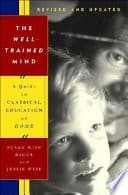
The Well-Trained Mind: A Guide to Classical Education at Home

The definitive guide to classical home education by Susan Wise Bauer and Jessie Wise. Drawing on the trivium β€” grammar, logic, and rhetoric β€” it lays out a complete K-12 curriculum framework organized by the three stages of childhood development, with detailed subject-by-subject guidance, book lists, and practical scheduling advice for homeschooling parents.

Susan Wise Bauer, Jessie WiseΒ·2016
View

Teaching from Rest: A Homeschooler's Guide to Unshakable Peace

Sarah Mackenzie addresses the anxiety, overwhelm, and burnout that many homeschooling parents experience, drawing on the classical concept of scholΓ© (restful, unhurried learning) to argue that a peaceful, intentional approach is not only better for parents but produces deeper, more lasting learning in children.

Sarah MackenzieΒ·2015
View

We are partially ad-funded!