Free
🔗Resource
Hack Education
Audrey Watters' longstanding independent research site dedicated to the history and future of education technology — critical, rigorous, and free of advertising or vendor influence.
Free·Online
View 16 resources matching your filters
Audrey Watters' longstanding independent research site dedicated to the history and future of education technology — critical, rigorous, and free of advertising or vendor influence.
A detailed exploration of Ivan Illich's 1971 'Deschooling Society,' tracing his critique of compulsory schooling as an institution that manufactures dependency, his alternative vision of 'learning webs' connecting learners with peers and mentors, and the enduring relevance of his ideas to contemporary alternative and self-directed education movements.
Audrey Watters reflects on the state of education technology and the erosion of public commitment to schooling following personal tragedy. The piece offers a somber critique of the industry's trajectory and the need for a cultural shift away from current trends.
Patrick Farenga traces the origins of deschooling as a concept, exploring how Ivan Illich's 1971 book shaped the unschooling and homeschooling movements and what its vision of learning freedom means today.
Austrian-Croatian philosopher whose 1971 book Deschooling Society remains one of the most radical and influential critiques of institutional education ever written.
Three-time New York City Teacher of the Year who resigned from teaching to become one of the most radical critics of compulsory schooling in America.
A thoughtful lecture exploring Ivan Illich's radical 1971 critique of compulsory schooling — his argument that schools institutionalize inequality, monopolize learning, and destroy authentic education — and asking how prescient his vision of networked learning has turned out to be in the age of the internet and self-directed education.
Audrey Watters explores the historical origins of the school bell, arguing it was designed to condition students for factory work rather than reflect natural rhythms. The piece critiques how industrial-era technologies continue to dictate modern educational structures and behaviors.
Education scholar David Buckingham revisits Ivan Illich's 1971 manifesto in the context of pandemic school closures and the growing alternative education movement. He finds that Illich's critique of compulsory schooling and his vision of learner-led learning webs anticipates much of what the internet has made possible — while also identifying the limits of that optimism.
Economist Bryan Caplan argues that the primary purpose of education is signaling rather than learning — and that this means we're wasting trillions of dollars on schooling.
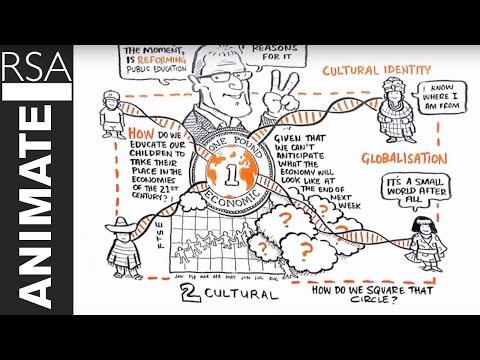
Sir Ken Robinson’s animated RSA talk arguing that industrial-age schooling suppresses creativity and divergent thinking — and calling for a revolution in education.
Gatto's follow-up to Dumbing Us Down, examining how compulsory schooling became a tool for managing and limiting the population — and profiling the historical figures who built the system.
John Taylor Gatto's influential indictment of compulsory schooling, drawing on his 30 years as a NYC teacher and three-time Teacher of the Year.
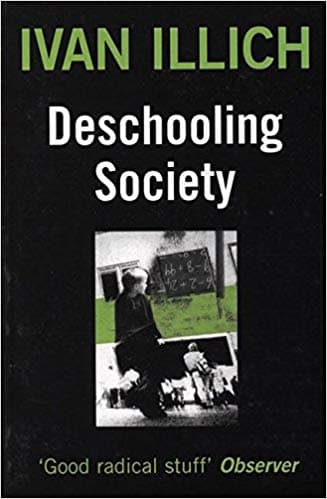
Ivan Illich's radical 1971 critique of compulsory schooling argues that institutional education creates dependency and proposes 'learning webs' as an alternative.
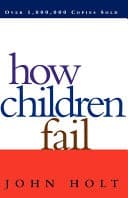
Holt's groundbreaking first book, based on his classroom observations, arguing that schools cause children to fail by making them afraid of the wrong answer.
We are partially ad-funded!